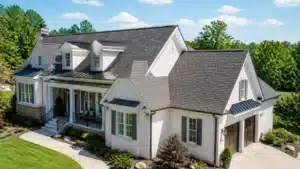
Homeowners across the Upstate know that a sudden South Carolina storm is more than just a bit of thunder and heavy rain. It is a direct challenge to the integrity of your property. When the clouds clear over Greenville and Simpsonville, the immediate concern shifts from staying dry to assessing the aftermath. However, the period following a storm is often characterized by high stress and snap decisions, leading to errors that can cost thousands of dollars in the long run.
Property owners frequently underestimate the complexity of navigating insurance claims and technical repairs. Whether it is a fallen branch in the North Main area or hail impact in a Simpsonville subdivision, the steps you take in the first 48 hours are critical. Failing to approach the situation with a clear strategy often results in denied claims, poor workmanship, and recurring leaks that plague your home for years…
1. Waiting Too Long to Document the Evidence
Property owners often assume that if the roof isn’t actively pouring water into the living room, they have plenty of time to act. This is perhaps the most common trap. Documentation is the currency of insurance claims. The longer you wait to record the state of your property after a storm, the easier it is for an insurance adjuster to claim the damage was pre-existing or caused by general wear and tear.
Immediately after the weather clears, you should take high-resolution photos of your yard, your gutters, and any visible debris. Look for “bruising” on your shingles or piles of granules at the base of your downspouts. If you wait weeks or months, the specific evidence of that one storm becomes blurred by subsequent weather events. In Greenville SC, where we see multiple storm fronts throughout the spring, keeping a clear timeline is essential for a successful claim.

2. Hiring “Storm Chasers” Over Local Expertise
Homeowners in the Upstate are familiar with the “knock on the door” that follows a major hailstorm. These are often “storm chasers”: contractors from out of state who follow weather patterns to find high-density repair areas. While they might seem convenient, hiring them is a significant risk.
These companies are built on volume, not quality. Once the “storm season” ends, they move on to the next state, leaving you with no local point of contact if your roof starts leaking six months later. When you choose roofing Simpsonville SC professionals who live and work in your community, you are securing a workmanship warranty that actually means something. Local contractors like State 8 Roofing rely on our reputation in the Greenville area, meaning we have a vested interest in doing the job right the first time.
3. Making Permanent Repairs Before the Adjuster Arrives
Emergency roof repair SC often involves a sense of urgency, but there is a fine line between “emergency mitigation” and “permanent repair.” A major mistake is completely replacing sections of the roof before an insurance adjuster has had the chance to see the original damage.
Insurance policies typically require you to prevent “further damage.” This means you should absolutely throw a tarp over a hole or cover an exposed ridge to stop water from entering the home. However, if you tear off the damaged shingles and put new ones on, the adjuster cannot verify the extent of the storm’s impact. Always stick to temporary measures and keep every receipt for materials used. For professional guidance on how to secure your home without jeopardizing your claim, you can contact us for an immediate consultation.
4. Assuming “No Leak” Means “No Damage”
Residential roofs are designed to be resilient, but they are not invincible. A very common misconception among Greenville homeowners is that a roof is fine as long as the ceiling is dry. Hail damage, in particular, is insidious. It creates “bruises” in the asphalt shingle mat that knock away the protective granules.
Over time, the UV rays from the South Carolina sun bake those exposed spots, causing the shingle to crack and fail prematurely. You might not see a leak today, but you are effectively looking at a roof that will fail in three years instead of fifteen. This “hidden” damage is exactly why a professional inspection is necessary even if you don’t see water in the attic. We specialize in identifying these subtle signs during our shingle roofing assessments.

5. Risking Safety with DIY Roof Inspections
Homeowners often feel the need to climb a ladder and walk their roof to see the damage for themselves. While we admire the proactive spirit, this is a dangerous and often counterproductive mistake. Steep pitches, loose granules, and structural damage from the storm make a roof a hazardous environment for anyone without professional safety gear.
Furthermore, an untrained eye often misses the most critical signs of wind uplift or mechanical damage. Professional roofers use specialized tools and have the “trained eye” to spot creased shingles that may look flat from a distance but have actually lost their seal. Instead of risking a fall, look for a company that offers a free estimate to get a safe, accurate, and professional perspective on your home’s condition.
6. Misunderstanding Your Insurance Policy Coverage
Insurance policies are legal documents filled with jargon that can be confusing for the average property owner. Many people fail to realize the difference between “Actual Cash Value” (ACV) and “Replacement Cost Value” (RCV). If your policy is ACV, the insurance company will only pay for what your old roof was worth at the time of the storm: meaning if your roof was 15 years old, you might only get a fraction of the cost of a new one.
Additionally, some policies have specific “wind and hail” deductibles that are higher than your standard deductible. Not knowing these numbers before you start the repair process can lead to significant “sticker shock” when the final bill arrives. It is vital to review your policy or have a trusted roofing partner help you navigate the language so you aren’t left with an unexpected financial burden.

7. Choosing a Contractor Based Solely on the Lowest Bid
It is tempting to look for the cheapest possible price when faced with an unexpected repair. However, in the roofing industry, you truly get what you pay for. A low-ball bid usually indicates one of three things: the contractor is cutting corners on materials, they aren’t carrying proper insurance, or they aren’t paying for skilled labor.
A “cheap” roof repair often results in reused flashing, poor ventilation, or shingles that aren’t nailed according to manufacturer specifications. This not only leads to future leaks but can also void the manufacturer’s warranty on the materials. At State 8 Roofing, we believe in providing value through reliability and quality. We focus on long-term solutions that protect your home’s equity rather than quick fixes that fail under the next Upstate thunderstorm.
Protecting Your Greenville Home the Right Way
Navigating the aftermath of a storm doesn’t have to be a nightmare. By avoiding these seven common mistakes, you place yourself in a position of strength. You ensure that your insurance claim is handled correctly, your repairs are done to the highest standard, and your family remains safe under a sturdy roof.
The Upstate weather is unpredictable, but your roofing partner shouldn’t be. Whether you are dealing with a minor leak or need a full replacement after a major wind event, our team is here to provide the reliable service you deserve. We understand the specific needs of South Carolina homes and the nuances of the local climate.
If you suspect your home has sustained damage, don’t wait for the next rain cloud to appear. Taking action now is the best way to prevent small issues from turning into catastrophic failures. You can explore our services to see how we help homeowners across Greenville, Simpsonville, and the surrounding areas maintain beautiful, durable roofs.

The integrity of your home starts at the top. Don’t let a single storm compromise your biggest investment. By choosing local, staying documented, and prioritizing quality over cost, you can rest easy knowing your roof is ready for whatever the South Carolina sky throws at it next.
For more tips on maintaining your home and understanding the roofing industry, check out our blog category for regular updates and expert advice.
© 2026 State 8 Roofing. All rights reserved. No part of this publication may be reproduced, distributed, or transmitted in any form or by any means, including photocopying, recording, or other electronic or mechanical methods, without the prior written permission of the publisher, except in the case of brief quotations embodied in critical reviews and certain other noncommercial uses permitted by copyright law.